Friday, 11 March 2016

Models of Innovation

Over the past few weeks, we have continued our journey through the innovation process and also engaged in some complementary readings which have provided a theoretical perspective to contextualise what we have been doing in class.

Upon reading the articles written by Darso (2012) and Scharmer (2008), it has become evident that there are distinctly different models that can be used to approach a task in innovation. These are the stage-gate model, highlighted by Scharmer (2008), and the non-stage-gate model, highlighted by Darso (2012).

The stage-gate model is process-orientated and requires the user to move through a clear series of steps. When one step is completely finished, another is started. Within this one process, Scharmer (2008) presents five separate movements that form the path of a 'U'; these are co-initiating, co-sensing, co-presencing, co-creating and co-evolving. He also notes that the journey through the 'U' develops seven essential leadership capacities; these are holding the space of listening, observing, sensing, presencing, crystalizing, prototyping and performing. In contrast, the non-stage-gate model (or the Diamond Model), presented by Darso (2012), does not have a distinct set of steps for the user to follow. Rather, the four parameters contained within 'The Diamond of Innovation', namely concepts, ignorance, knowledge and relations are all central for initiating, supporting and managing the innovation process. During a whole-class discussion regarding these two models, we established that both encourage the user to be open-minded and emphasise the importance of effective communication and listening to form relations of trust between group members. It was interesting to compare these two models and observe that the innovation process that we are involved in is defined under a third model; The Design Thinking Model, also recognised as a stage-gate model.

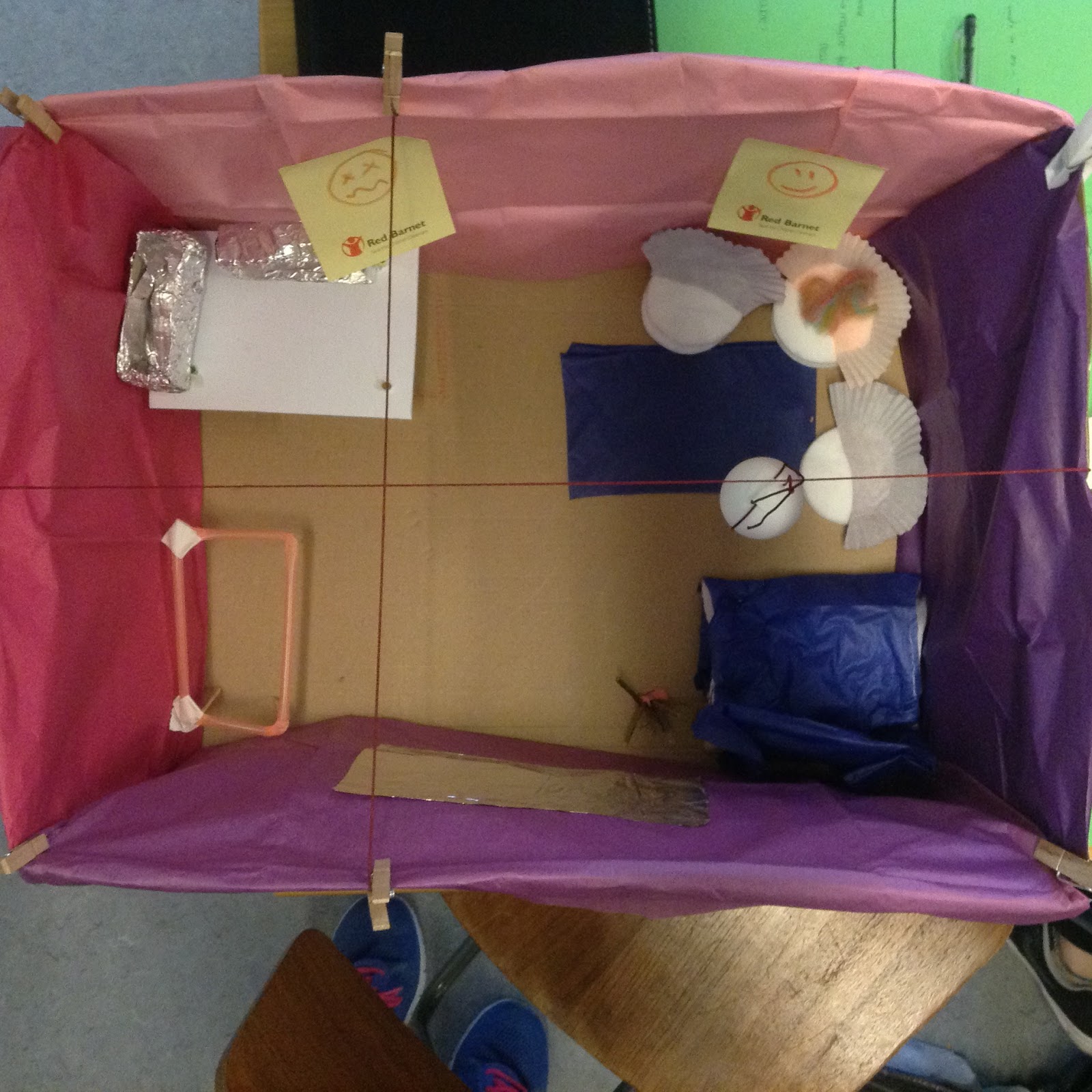
Design Thinking for Educators (2012), which promotes the Design Thinking Model for innovation, outlines five phases of the innovation process; these are discovery, interpretation, ideation, experimentation and evolution. In groups, our 'design challenge' has been to suggest ideas that could help students to stay at university after class in the new UCC campus at Carlsberg, which opens in September 2016. As the Design Thinking for Educators (2012) toolkit notes, this has required us as a group to be intuitive, to interpret what we have observed and to develop ideas that are emotionally meaningful to those we are designing for. This has been a complex process and has involved us stepping out of our comfort zones as we have learned about the processes involved in innovation. The toolkit also suggests that collaboration is inherent to Design Thinking and, as a group, we have had to embrace each other's strengths and weaknesses in order to make progress. During the experimentation phase, it was interesting to assign de Bono's (1985) 'Thinking Hats' to each group member and ascertain the role that each one of us plays within the group. As we approach the final phase of evolution, I am excited to pitch our idea and, perhaps, begin putting it into action.


Phase 3: Ideation

Phase 4: Experimentation

Reference List

Darso, L. (2012) 'Innovation Competency - An Essential Organisational Asset' in S. Hoyrup, M. Bonnafous-Boucher, C. Hasse, M. Lotz and K. Moller (eds) Employee-Driven Innovation: A New Approach, New York, Palgrave Macmillan.

IDEO (2012) Design Thinking for Educators, available at http://www.designthinkingforeducators.com/ (accessed 11/03/16).

Scharmer, C.O. (2008) Theory U: Leading from the Future as it Emerges, California, Berrett-Koehler Publishers.

The de Bono Group (1985) Six Thinking Hats, available at http://www.debonogroup.com/six_thinking_hats.php (accessed 11/03/16).
 

Thursday, 18 February 2016

An introduction to innovation


Based on our reading, it is evident that there are many different aspects associated with the concept of innovation.

It was interesting to discover the natural instinct that human beings have to be innovative. Wagner (2012, p. 27) refers to Bonsen (no date) who claims that being innovative is central to being human; indeed, this is closely connected to Wagner’s (2012) claim that human beings are born with an innate desire to explore, experiment and imagine new possibilities. As this desire to innovate is inherent in human beings, we believe that teachers must harness this within the classroom and build upon both their own as well as their students’ desires to be creative and imagine new ideas. Indeed, Wagner (2012) suggests that children are central to the processes involved in innovation and notes the importance of teaching, mentoring and parenting our young people to become the innovators that our planet needs to thrive in the 21st century.

We believe that innovation begins with the children in our classes and so it follows that play is an essential component of innovation, as play is recognised as the principal activity of early childhood. Wagner (2012) highlights the importance of play, claiming that through playful activities, children are able to learn. The skills that children develop as they play, such as risk-taking, communication skills, creativity and imagination contribute to innovative thinking later on in life and the development of innovative processes. Play is also a key element of both the Austrian and Northern Irish primary school curricula and is recognised in both as a crucial part of children’s learning that contributes to the development of the aforementioned skills.

The importance of innovation is also highlighted by Design Thinking for Educators (2012), a toolkit which notes that those who have responsibility for educating children and young people are distinctly positioned to keep a pulse on students’ evolving needs and, therefore, uniquely qualified to understand and design for the changing needs of schools in our society today. Design Thinking is an integral element in education which can be used to approach any challenge in relation to the curriculum, spaces, processes and tools and/or systems. It rests on the fundamental belief that anyone can create change; a point which is also made by Kelley and Kelley (2013) who claim that we all have a creative potential within us that is simply waiting to be tapped. They note that a belief in this creative capacity lies at the heart of innovation and thus, it is essential that teachers believe in their own individual abilities to create change in the world around them. Kelley and Kelley (2013, p. 3) refer to Robinson (2006) who claims that creativity is as important in education as Literacy and should be treated with the same status. As previously alluded to, this again highlights the significance of both children and teachers harnessing their creativity and using it to bring about positive changes within the school environment. I look forward with anticipation to seeing how creativity is implemented within the Danish education system during my practice placement amongst both pupils and teachers as well as investigating the place that innovation and entrepreneurship education have within Danish classrooms.

Reference List

IDEO (2012) Design Thinking for Educators, available at http://designthinkingforeducators.com/ (accessed 18/02/16).

Kelley T. & D. Kelley (2013) Creative Confidence: Unleashing the Creative Potential Within Us All, Palo Alto, IDEO.

Wagner, T. (2012) Creating Innovators: The Making of Young People Who Will Change the World, New York, Scribner.